Welding
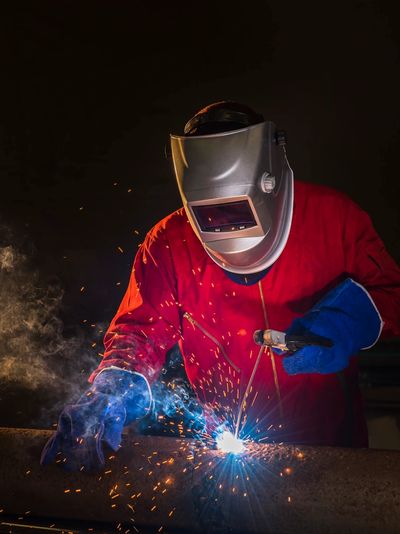
Welding in Oil & Gas Industry: Processes, Standards, and Quality Control
Welding is one of the most critical processes in the oil and gas industry, playing a vital role in the fabrication, construction, and maintenance of essential infrastructure. From pipelines and pressure vessels to heat exchangers and storage tanks, welding ensures the structural integrity and long-term reliability of components operating under extreme conditions.
In this article, we explore the importance of welding, commonly used welding processes, industry standards, and the role of inspection and quality control in ensuring safe and efficient operations.
What is Welding?
Welding is a fabrication process that joins materials, typically metals or thermoplastics, by applying heat, pressure, or a combination of both. The process results in a strong, permanent bond that can withstand mechanical stress and harsh environmental conditions.
In industries like oil and gas, welding is not just a joining method—it is a critical factor that directly impacts safety, performance, and compliance with international standards.
Importance of Welding in Oil & Gas Industry
The oil and gas sector operates in some of the most demanding environments, including high pressure, high temperature, and corrosive conditions. Welding is essential in:
- Pipeline construction for transporting oil and gas over long distances
- Pressure vessels used in refineries and processing plants
- Storage tanks for crude oil and petroleum products
- Heat exchangers for temperature control in industrial processes
A single welding defect can lead to serious failures, including leaks, explosions, and environmental hazards. Therefore, high-quality welding is essential to ensure operational safety and reliability.
Common Welding Processes Used
1. Shielded Metal Arc Welding (SMAW)
Shielded Metal Arc Welding (SMAW), commonly known as stick welding, is one of the oldest and most widely used welding processes in the world. It uses a consumable electrode coated in flux to create the weld.
How It Works
An electric current passes through the electrode, creating an arc between the electrode and the base metal. The heat melts both the electrode and the metal, forming a strong weld joint. The flux coating produces a protective gas and slag layer to prevent contamination.
Advantages of SMAW
- Simple and cost-effective equipment
- Highly portable (ideal for field work)
- Works well in outdoor conditions (wind, dust)
- Suitable for thick materials
Limitations
- Slower compared to modern processes
- Requires slag removal after welding
- Lower productivity
Applications in Oil & Gas
- Pipeline welding
- Structural fabrication
- Maintenance and repair work
- Remote site operations
2. Gas Tungsten Arc Welding (GTAW / TIG)
Gas Tungsten Arc Welding (GTAW), also known as TIG welding, is known for producing high-quality and precise welds. It uses a non-consumable tungsten electrode and an inert gas (usually argon) for shielding.
How It Works
An arc is formed between the tungsten electrode and the workpiece. A separate filler material may be added manually. The shielding gas protects the weld area from contamination.
Advantages of GTAW (TIG)
- Extremely high-quality, clean welds
- No slag formation
- Ideal for thin materials
- Excellent control and precision
Limitations
- Slower process
- Requires skilled welders
- Higher cost compared to SMAW and GMAW
Applications in Oil & Gas
- Root pass welding in pipelines
- Stainless steel and alloy welding
- Pressure vessels and heat exchangers
- Critical and high-specification components
3. Gas Metal Arc Welding (GMAW / MIG)
Gas Metal Arc Welding (GMAW), commonly called MIG welding, is a semi-automatic or automatic welding process that uses a continuously fed wire electrode and shielding gas.
How It Works
A wire electrode is continuously fed through a welding gun, creating an arc that melts the wire and base metal. Shielding gas (argon or CO₂ mix) protects the weld pool.
Advantages of GMAW (MIG)
- High welding speed and productivity
- Easy to learn and operate
- Minimal post-weld cleaning
- Suitable for automation
Limitations
- Less effective in outdoor conditions (wind affects shielding gas)
- Equipment is less portable
- Requires clean surfaces
Applications in Oil & Gas
- Fabrication workshops
- Structural components
- Pipe spools manufacturing
- Production environments
4. Submerged Arc Welding (SAW)
Submerged Arc Welding (SAW) is a high-productivity welding process used for thick materials and heavy fabrication. It involves forming an arc beneath a layer of granular flux.
How It Works
The welding arc is “submerged” under a blanket of flux, which protects the weld from contamination and reduces spatter. A continuous wire electrode is used.
Advantages of SAW
- Deep weld penetration
- High deposition rate (fast for thick materials)
- Minimal spatter and high-quality welds
- Suitable for automation
Limitations
- Limited to flat or horizontal positions
- Not suitable for thin materials
- Requires specialized equipment
Applications in Oil & Gas
- Pressure vessel fabrication
- Large diameter pipelines
- Storage tanks
- Heavy structural components
Welding Procedure Specifications (WPS)
A Welding Procedure Specification (WPS) is a formal document that provides detailed instructions on how welding should be performed. It includes:
- Welding process and technique
- Base material and filler material
- Preheat and interpass temperature
- Welding parameters (voltage, current, travel speed)
WPS ensures consistency, repeatability, and compliance with industry standards. It is supported by Procedure Qualification Records (PQR), which validate that the welding procedure produces acceptable results.
Procedure Qualification Record)
In the welding industry, quality, safety, and compliance are non-negotiable. Whether you are working in oil and gas, construction, or manufacturing, ensuring that welding procedures meet industry standards is critical. This is where the Procedure Qualification Record (PQR) comes into play.
A PQR is a documented record that proves a specific welding procedure produces sound and reliable welds. It is an essential part of Welding Procedure Specification (WPS) compliance and serves as evidence that the welding method has been tested and validated according to standards like ASME, AWS, or ISO.
What is a Procedure Qualification Record (PQR)?
A Procedure Qualification Record (PQR) is a formal record that validates the welding procedure used for joining materials. It details every aspect of the welding process, including the type of materials, welding technique, filler metals, preheat and post-weld heat treatment, and other critical parameters.
The main purpose of a PQR is to demonstrate that a welding procedure can consistently produce welds meeting required mechanical properties such as:
- Tensile strength
- Bend tests
- Hardness
- Impact toughness
Without a properly approved PQR, a Welding Procedure Specification (WPS) is considered incomplete, and welds may not comply with regulatory or client standards.
Key Components of a PQR
A standard PQR document includes several critical details to ensure compliance and reproducibility:
- Base Material Details – The type, grade, and thickness of the material used.
- Filler Material Information – Type and classification of electrodes, wires, or rods used.
- Welding Process – Manual, semi-automatic, or automatic welding method applied.
- Preheat and Interpass Temperature – Required to prevent cracks and defects.
- Post-Weld Heat Treatment (PWHT) – If applicable, to relieve stresses.
- Welding Parameters – Voltage, amperage, travel speed, and number of passes.
- Position and Joint Design – Fillet, butt, lap, or other joint types.
- Test Results – Mechanical tests like bend, tensile, and impact tests.
Each section ensures that anyone following the WPS can reproduce the weld reliably and consistently.
Importance of PQR in Welding
A Procedure Qualification Record is vital for several reasons:
- Ensures Quality and Safety – PQR guarantees that welds will withstand operational stresses and environmental conditions.
- Regulatory Compliance – PQR is often required by standards such as ASME Section IX, AWS D1.1, ISO 15614, or client specifications.
- Process Validation – Confirms that welding procedures produce defect-free and structurally sound welds.
- Training and Reference – PQR serves as a reference for future welders and inspectors to follow the approved procedure.
Without a PQR, welds may be rejected, leading to delays, rework, or safety hazards.
Difference Between PQR and WPS
- Definition
· WPS: A document providing detailed instructions on how to perform a welding operation.
· PQR: A record of actual welding test results proving that a WPS produces a weld meeting required standards. - Purpose
· WPS: Guides welders to maintain consistency, quality, and compliance.
· PQR: Validates and qualifies the WPS before production welding. - Content
· WPS: Welding process, base/filler metals, preheat/post-heat instructions, welding positions, electrical parameters.
· PQR: Test weld details, materials, welding variables, and mechanical test results (tensile, bend, impact). - Preparation
· WPS: Prepared after PQR is qualified, before production welding.
· PQR: Generated through actual test welds and mechanical testing. - Usage
· WPS: Used by welders on-site for guidance.
· PQR: Reviewed by QA/QC engineers to approve WPS. - Nature
· WPS: Instructional and prescriptive.
· PQR: Evidential and descriptive. - Standards
· Both are governed by ASME Section IX, AWS D1.1, or ISO 15614 to ensure weld quality and safety.
Steps to Prepare a PQR
Creating a PQR involves a series of controlled steps to ensure compliance and repeatability:
- Select Materials and Joint Design – Choose the base and filler materials, and define the joint type.
- Perform Test Welds – Execute welds under controlled conditions using the intended welding process.
- Conduct Mechanical Testing – Test the welded samples for tensile strength, bend, impact, and hardness.
- Document Welding Parameters – Record all details like current, voltage, travel speed, and pre/post-heat treatments.
- Compile Results – Include all mechanical test results and observations in the PQR document.
- Approval – Submit the PQR for review and approval by a certified welding inspector or quality authority.
A properly documented PQR ensures that the welding procedure is repeatable, reliable, and compliant with industry standards.
Why PQR is Critical for Oil & Gas Industry
In industries like oil and gas, pipelines, pressure vessels, and storage tanks undergo extreme conditions. Structural integrity is critical, and any weld failure can have catastrophic consequences. PQR ensures:
- Welds meet strict code (ASME API, ISO etc.) requirements.
- Process is repeatable and reliable under field conditions.
- Compliance with client specifications and international standards.
Using PQR-approved WPSs reduces risk, ensures safety, and guarantees that the welding quality is consistent across projects.